
The bet on structural signals over speed of traction

Before it was a household name, Spinny ran on a model that didn’t let it control the one thing it was built on, cars.
.png)
Every iconic company has a version of itself that had to die first.
When Niraj Singh decided to change Spinny's business model, he did not ease into it. The company killed its first model overnight, flipped to a full-stack approach, and, in his own words, started building the business again from scratch. The cost of that decision was steep. A signed term sheet walked away, and Niraj ended up funding the pivot by mortgaging his own house.
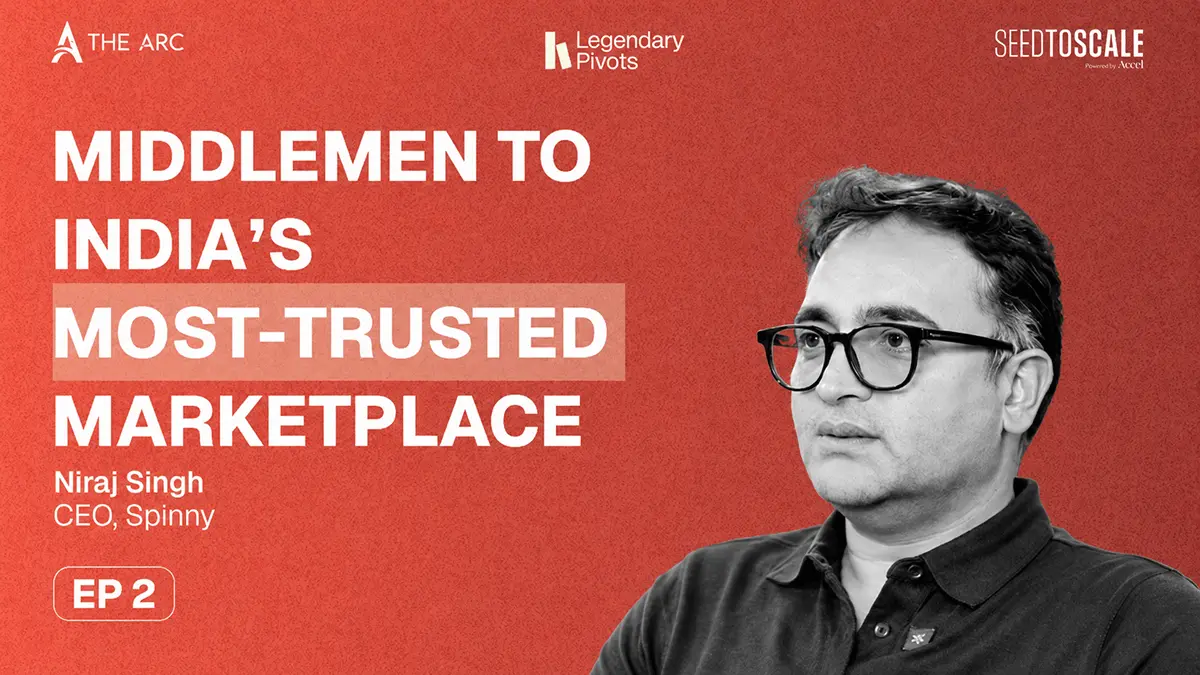
In this episode of Legendary Pivots, Niraj Singh, founder and CEO of Spinny, sits down to tell the story of one of the more gruelling pivots in the Indian startup ecosystem.
Entering a crowded used-car market as his third company after two earlier failures, Niraj kept hitting the same wall: a model that looked like it was scaling on the surface, but couldn't deliver the one thing he'd set out to build the brand around.
Rather than act on gut, the team tested the new idea in a corner of a parking lot with ten car slots. What that pilot revealed left no room for looking back. Niraj closes with his own rule for pivots: be true to the long-term vision, chase structural evidence over emotional bias, and never pivot just to change the speed of traction.
TheSpinnypivot,onpaper.

DOWNLOAD CASE STUDY
Timelines, unit economics before and after the pivot, and the decision framework the founders used, all written up as a reference you can keep.
Coming Soon
.png)